The Scottish Geology Trust will host the Scottish Geology Festival this autumn to encourage activity, events and engagement about Scotland’s incredible geological heritage.

The Scottish Geology Trust will host the Scottish Geology Festival this autumn to encourage activity, events and engagement about Scotland’s incredible geological heritage.
The Scottish Geology Festival is being organised by the Scottish Geology Trust, and will run from 1 September to 17 October 2021. We have received Events Scotland funding to support the Festival, and to organise events for families on some of Scotland’s most beautiful beaches. These will encourage visitors and local people to explore the variety of pebbles on a beach, and make connections from local bedrock to beach processes to climate change. The activities will be led by trained science communicators and volunteers, who can encourage deeper exploration, and are being developed as part of Scotland’s Year of Coasts and Waters.
To support these activities, the Trust is developing a new online guide to encourage people to explore Scotland’s pebble beaches.
The Scottish Geology Trust is seeking a contractor to prepare the beach pebble guide and deliver online training to introduce the guide and activities to the facilitators and volunteers who will run beach activities during the Scottish Geology Festival. Applications are invited by 5pm on Friday 18 June 2021.
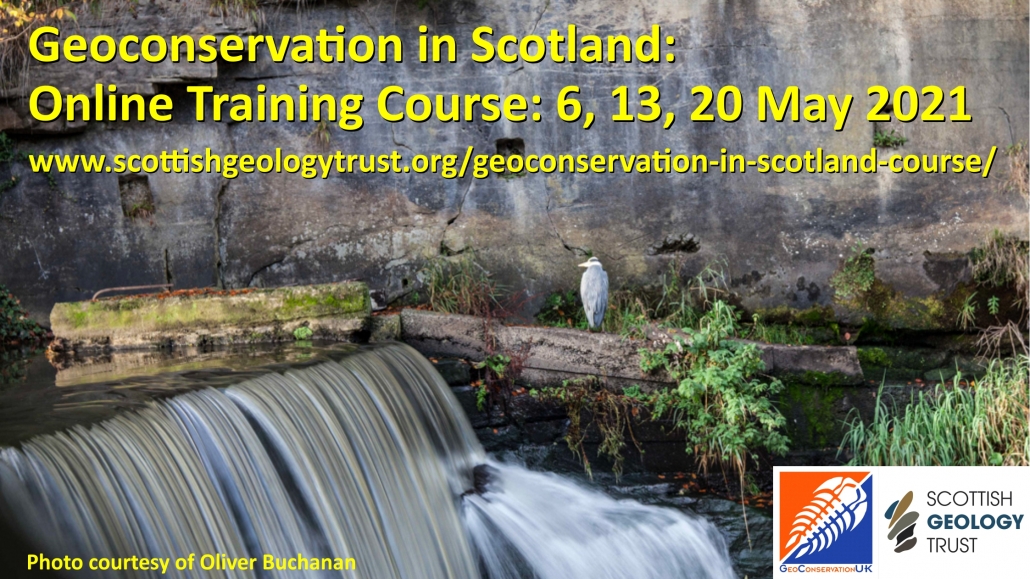 Geoconservation can be defined as action to conserve and promote geodiversity. In Scotland, there is a long history of work by local geoconservation groups to designate and promote Local Geodiversity Sites: the most important places for geology, geomorphology and soils outside statutorily protected nature reserves and Sites of Special Scientific Interest (SSSI). The designation of Local Geodiversity Sites is one way of recognising and protecting important earth science and landscape features for future generations to enjoy.
Local geoconservation groups work with local authorities to designate Local Geodiversity Sites, and work to raise awareness of sites and geodiversity through publicity such as leaflets, booklets, posters, interpretation boards and websites, and by developing access and educational usage of sites and trails. Local Geodiversity Sites were previously known as RIGS, Regionally Important Geological and Geomorphological Sites.
Scotland’s local geoconservation groups are members the national network, GeoConservation UK (GCUK).
The Scottish Geology Trust is keen to support and promote geoconservation in Scotland. Geoconservation is an important component of several of the themes of SGT activity, particularly “Engaging People and Communities” and “Science and Society”. We would like to encourage more people to get involved in identifying, monitoring and promoting LGS in Scotland, by supporting existing local geoconservation groups and perhaps in time establishing new groups.
This free online training course, delivered in partnership with Geoconservation UK, consisted of three sessions that gave an overview of geoconservation in Scotland and the monitoring and designation of Local Geodiversity Sites. Recordings of the presentations are available via the links below.
What is geoconservation and what do local groups do. This will include a brief introduction to the planning system in Scotland and examples of how geodiversity has been included in Local Development Plans.
Recording of presentations | Slides – Lesley Dunlop | Slides – Ian Stimpson
In central Scotland there are many existing Local Geodiversity Sites that have been designated in the last 20 years, but up until now there have not been systematically monitored. It is proposed to start a monitoring programme, using standard techniques developed by GCUK.
Recording of presentations | Site condition monitoring form | Site condition monitoring form guidance
How do sites get described and designated? An introduction to the site forms already in use in Scotland, and what types of information needs to be recorded to fully describe a new site. We will also consider the process that might be involved in getting sites designation and included in Local Development Plans, drawing on recent work in the Scottish Borders.
Any questions? Contact Angus Miller, Scottish Geology Trust engagement@scottishgeologytrust.org.
 The Scottish Geology Trust is keen to support and work in partnership with organisations and individuals to meet our aims. The SGT Engagement Theme Small Grants Fund will support small interpretation and engagement projects in 2021/22. Priority will be given to grants up to £500 that will result in tangible results within an achievable time frame.
Thursday 22 April 2021, 1-4pm
This free online conference was organised by the Scottish Geology Trust to share ideas and inspiring initiatives from Orkney to France that have successfully engaged different audiences in geology and how the Earth works. The event focussed on why it’s important to tell Earth’s story, drawing on case studies that show great examples of engaging audiences in geological sites, landscapes and climate change.
Conference Summary and Resources (pdf document)
Conference presentations on our YouTube channel
Programme:
13.00 – Welcome and introduction – why tell Earth’s story? Chair: Dr Elsa Panciroli – Leverhulme Early Career Researcher at Oxford University Museum of Natural History, Associate Researcher at National Museums Scotland, and Trustee for the Scottish Geology Trust.
13.10 – ‘Lemptégy – opening the heart of a volcano to all’ – Professor Benjamin van Wyk de Vries, Université Clermont Auvergne, France.
13.35 – ‘An island story: engaging the local community.’ Katy Firth, Stromness Museum, Orkney.
14.00 – ‘Engaging people in climate change’ – Dr Hermione Cockburn, Scientific Director in Public Engagement at Dynamic Earth.
14.25 – 10 minute break
14.35 – What are we already doing in Scotland? – Angus Miller, Engagement lead, Scottish Geology Trust.
14.50 – Breakout room workshops – we will have three breakout rooms on the themes:
– Engaging visitors and the general public
– Engaging the local community
– Engaging people in climate change
You are free to join any room where we will facilitate discussions on best practice and seek to find opportunities for activities and engagement in Scotland.
15.30 – Wrap up and thank you.
This conference is aimed at Scottish Geology Trust members and volunteers, and representatives from community and partner organisations – anyone who is interested in discussing how we tell Earth’s story for different audiences. The idea is that people will be inspired to think about projects in their own areas, and also will meet people and make connections at the conference that will help them put ideas into practice.
An international celebration for the 250th anniversary of the life and Smailholm Towerworks of Sir Walter Scott gets underway this weekend, Saturday 20th March, with an online broadcast of a spectacular light show from the Scottish Borders.
The Scottish Geology Trust is delighted to have partnered with the Walter Scott 250 programme, joining in this celebration of Sir Walter Scott through a number of events, which will be organised for the Scottish Geology Festival. Our own ‘father of geology’, James Hutton and Scott were certainly associates and our events will focus on their related works and areas of support as well as geoheritage in the Scottish Borders.
We would like to invite our members and partner organisations to now consider any events they might like to list as part of the Scottish Geology Festival that relate or focus on the Walter Scott 250 celebrations including Geopoetry, talks, and events.
For now, our members and followers can tune into www.WalterScott250.com, at 6pm (GMT) on Saturday 20th March to view the stunning display at Smailholm Tower.
The broadcast will feature well-known Scott enthusiasts, including Outlander author Diana Gabaldon who will share how Scott inspired her and what her writing has in common with the 19th Century author. This will be followed by the world premiere of a brand-new short film of the Young Scott, created by artist and director, Andy McGregor, which will be projected onto the 15th-century tower.
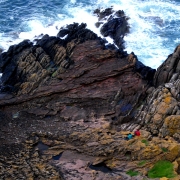
Steve Adams, the Founder and Managing Director of Balgownie Geoscience, is documenting the best geological outcrops along the east coast of Scotland.
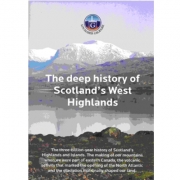
Three recent publications explore different aspects of the geology of Scotland’s western highlands and islands. Whether you are interested in fossils, metamorphic rocks or sense of place, something for everyone in this selection …
Jurassic Skye: Dinosaurs And Other Fossils Of The Isle Of Skye, by Sarah White and Dugald Ross, 2020, Pisces Publications ISBN: 9781874357971
The Isle of Skye is justifiably famous for its dinosaur fossils, in particular some spectacular footprints and trackways. As a northern outpost of Jurassic rocks in Britain, Skye has revealed a fascinating range of fossils, not only of dinosaurs, but also ichthyosaurs, plesiosaurs, turtles, crocodiles, mammals and plants. This is the first book to describe this wealth of material and it is illustrated throughout with photos of fossils as well as their finders. Although aimed an a general audience, it also contains detailed appendices for those who would like to dig a little deeper into the subject.
The Deep History of Scotland’s West Highlands, published by Lochaber Geopark, 2020.
This well-illustrated 24-page booklet is published by the Lochaber Geopark. It describes the geological events and processes that have led to the formation of the rocks and landscapes of Lochaber and the wonderful scenery we can see today. Available to buy online from the Edinburgh Geological Society.
The Changing Outer Hebrides by Frank Rennie, 2020, Acair ISBN: 9781789070835
This is a fascinating and intimate account of the inter-relationship between one small island village in the Hebrides and the wider world. From the formation of the bedrock 3 billion years ago, to the predictable near-future, the layers of this unique landscape are explored. The social history of the people is closely interwoven with the natural environment in a journey of deep mapping to consider the meaning of special places. Through the Iron Age and the Clearances to the contemporary events of community land ownership, a portrayal is given that challenges the perception that this is a remote place, isolated at the edge, but instead is crucial to our contemporary relationship with the land.
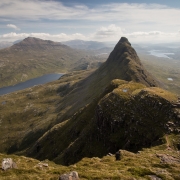
We did it! THANK YOU!
Our first Crowdfunding Campaign has been a resounding success – we raised a huge £36,523 with 363 supporters in 36 days!!
The donations are still coming! The current total includes giftaid and we will publish the final total in the new year when all the gifts have been received and counted.
We want to take this opportunity to thank all of our generous supporters for making our first fundraiser so successful, we are very happy that there are so many people out there that share our passion for supporting Scotland’s geoheritage and communities.
Thanks to your help the trust will only get stronger. With these funds we are now able to make progress with our 2021 plans and activities and we’ll be releasing news of those projects in the new year so watch this space.
We’d like to say a very special thank you to those that have been so generous with their time and support; Professor Iain Stewart and Alexander McCall Smith, CBE who both offered their call to arms for Scotland’s geology through the campaign’s video, and the wonderful volunteers that have helped us throughout this campaign; Cara Wells, Susan Miles, Elisabeth McCulloch, Dr Stephanie Flude, Dr Katie Strang, Simon Gould, Chris Jack; we couldn’t have done it without you.
When we set up the charity we had no idea that a global pandemic was imminent and all of your generous support means we are now back on track so that we can reach people across Scotland and the world to promote, share and enjoy Scotland’s geological heritage and work together towards a sustainable future.
If you missed out on supporting the Crowdfunder you can donate directly via PayPal on our website or click here.
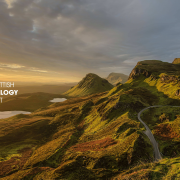
The Scottish Geology Trust has received a donation of £10,000 from an anonymous donor. This support comes at a crucial point for the Trust as they urgently need support to ensure the its continued growth and progress for 2021 plans and activities.
Having launched just before lockdown, the Trust has been severely impacted by the loss of funding opportunities due to the Coronavirus. The Trust is currently running its first Crowdfunder campaign where it marked the halfway point on 23rd November with just two weeks remaining to reach the campaign target. A £35,000 goal has been set for this campaign by December 8th, 2020, which will allow the Trust to continue operating as planned well into 2021.
If you have yet to support the Crowdfunder, then please donate now. Along with your donation, there are some fantastic rewards up for grabs, but many of these are being claimed already, so supporters will want to act fast.
To those who have kindly donated, the Trust is asking for help to spread the word about this vital campaign. Share why our geology matters with your friends, family, colleagues across social media or email.
With your help, the Trust can help support, promote and celebrate Scotland’s geology and its role in creating a sustainable future.
Follow, share, tweet on social media:
Twitter: @scottishgeology
Instagram: @scottishgeologytrust
Facebook: @scottishgeologytrust