

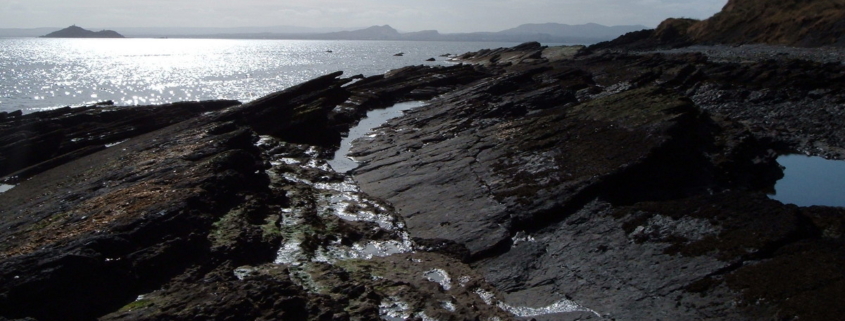
The Fife coastline has a rich array of rock types that influenced the locations of harbours and the use of local resources. This short course gives an overview of the history of the formation of the rocks of Fife and takes students on walking excursions to key geological sites.
The course offers an overview of the geology of Fife, surveys how the modern landscape of Fife formed, and allows students to appreciate how the long, slow story of change that has created this area continues with modern processes.
The gently undulating landscapes of Fife mask a turbulent geological past. Rocks, fossils and landforms of the area tell of baking deserts, tropical rainforests and erupting volcanoes. In the more recent geological past, this area was covered by ice, which shaped the contemporary landscape.
Direct observation during outdoor learning sessions helps students to recognise the main rock types found in the area and understand the links between geological history, human activity and modern landscape.
Key topics include the study and observation of a wide range of sedimentary rocks; past volcanic activity and volcanic necks filled with agglomerate and minor intrusions; examples of folds and faults; glacial erratics and raised beach.
Excursions give students the opportunity to directly observe and understand how the modern landscape of Fife coastline has been formed.
Saturday, 22 March & Sunday, 23 March, 10:30-16:00 (2 classes)
Tutor: Angus D Miller BSc PhD
www.course-bookings.lifelong.ed.ac.uk/courses/SN/science-and-nature/SN094/geology-of-fife/

